List Segmentation Is an Execution Problem, Not a Marketing Theory
Most teams talk about list segmentation like it’s a CRM feature or a marketing exercise.
It isn’t.
Segmentation is an execution decision. It determines how clearly you think, how efficiently you act, and whether your outreach actually respects reality.
If you have a list of people—customers, former customers, prospects—the question isn’t what tool do we use?
The real question is: how do we prioritize action without drowning in personalization or defaulting to noise?
Why Segmentation Exists at All
In theory, you could design a perfectly customized message for every individual.
In practice, that collapses under its own weight.
At the other extreme, blasting the same message to everyone assumes people will “sort it out themselves.” That’s not strategy—that’s abdication.
Segmentation exists to balance relevance with usability.
Not elegance. Not purity. Usability.
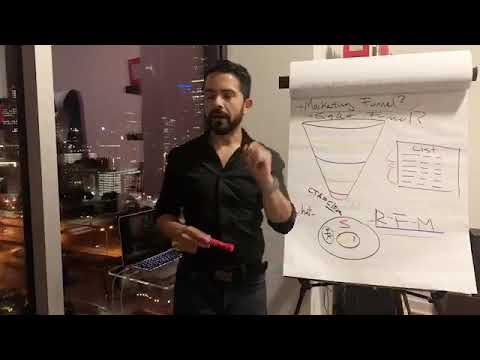
The RFM Shortcut (Recency, Frequency, Monetary Value)
One of the most practical starting points is RFM analysis:
- Recency – How recently has someone engaged or bought?
- Frequency – How often have they done business with you?
- Monetary Value – How much value have they actually contributed?
This isn’t theory. It’s a fast way to surface who deserves attention now, not eventually.
RFM doesn’t tell you what to say—but it tells you who you should be thinking about differently.
Stop Treating the Funnel Like Physics
Most marketing education treats the “funnel” as an inevitable force—people flow in, gravity pulls them down, money comes out.
That’s not how reality works.
A funnel is a metaphor, not a law of nature.
And metaphors are dangerous when you forget they’re metaphors.
There is no gravity in sales.
There is only attention, trust, timing, and capital—and all of those are constrained.
What actually exists is a sales process, not a funnel.
A path.
One that must be actively navigated, not passively trusted.
Marketing Lives Inside Sales (Not Next to It)
It’s common to hear “sales or marketing.”
That framing is backwards.
Marketing happens inside the sales process.
Every interaction—email, post, ad, referral, reputation—pre-loads the sale before a salesperson ever appears.
The best salespeople understand this intuitively.
They market as they sell.
The worst marketing systems exist to avoid selling altogether—and that avoidance shows.
A Simple Execution Model That Actually Works
Instead of endless micro-segments, start with three buckets:
- Current customers
- Former customers
- Prospects
That’s it.
Now pair those with three core messages:
- The book
- The event
- The consulting work
Three segments × three messages = nine angles.
Nine clear executions beat one “perfect” message that never ships.
Each message doesn’t need to be clever—it needs a hook:
- State the problem
- Agitate the consequence
- Present the solution
That structure works because it mirrors how people decide—not how funnels are drawn.
Everything Is Sales—Whether You Admit It or Not
People don’t decide when your pitch starts.
They decide when they first hear about you.
That means:
- Your positioning is already selling
- Your constraints are already visible
- Your credibility is being judged before you speak
You don’t compete with everyone.
You compete where you’re believable.
Execution begins when you accept those constraints—and design within them instead of pretending they don’t exist.
Why This Matters More Than Tools Ever Will
If sales were fully automatable, everyone would do it—and differentiation would collapse into price.
What creates leverage is how you move people through decisions, not the software you use to do it.
Segmentation isn’t about labels.
It’s about clarity of action.
And clarity is the rarest execution advantage most teams never develop.
FAQs
What is list segmentation in practical terms?
List segmentation is the process of grouping contacts so you can act differently toward them without over-customizing every interaction.
Why is RFM a good starting point?
RFM focuses attention on behavior, not assumptions. It surfaces who is active, valuable, and worth prioritizing right now.
Is the marketing funnel wrong?
The funnel is useful as a metaphor—but dangerous when treated as a law. Sales is a navigated process, not a gravity-driven flow.
Should marketing and sales be separate?
Organizationally, maybe. Strategically, no. Marketing lives inside the sales process whether teams acknowledge it or not.
How many segments should a team start with?
Three is usually enough to execute clearly without paralysis: current, former, and prospective customers.
Need help turning strategy into action instead of frameworks into decks? Reach out at [email protected] or book a call with me:
This post connects to the Execution knowledge branch:
https://gabebautista.com/essays/execution/