Philosophy of Business

Why some Organizations and People have not Figured out Remote Work.

Why Some Still Haven’t Figured Out Remote Work (And Why This Moment Changes Everything) The world doesn’t usually change overnight. But sometimes it does. In just a matter of days, work, travel, supply chains, and social interaction shifted simultaneously. This is not a moment to panic—and it’s definitely not a moment to wait and “see […]

Why some Organizations and People have not Figured out Remote Work. Read More »

Why the MLM Business Model is Unsustainable.

Why Most MLM Business Models Collapse (It Comes Down to One Metric) Multi-level marketing (MLM) is one of those topics that immediately creates controversy. Every time I talk about it, people message me, comment, and push back hard. So instead of arguing emotionally, let’s talk about this like adults.Let’s talk about business mechanics. Because when

Why the MLM Business Model is Unsustainable. Read More »

New Year’s Realizations. Instead of New Year’s Resolutions

EDIT (the above video recorded before 2020! ) – Still, Here is What works for me instead of New Year’s Resolutions. Every year, people ask the same question: What are your goals for next year? I don’t answer it that way anymore. Not because goals are bad—but because most people ask the question too late

New Year’s Realizations. Instead of New Year’s Resolutions Read More »

Taped Banana Work of Art or Con of Art? The Creative Process and the Role of Art in the Human Psyche.

The Banana, Creativity, and the Mistake We Make When We Judge Art A banana taped to a wall sold for a six-figure price.Another artist later ate the banana, documented the act, and turned that into a second artwork. Predictably, most reactions focused on outrage or ridicule. But the banana itself isn’t the real subject here.

Taped Banana Work of Art or Con of Art? The Creative Process and the Role of Art in the Human Psyche. Read More »

Where are all the Toxic People At? Incomplete Narratives and the its Dangers.

Incomplete Narratives: Why the Brain Needs Stories (and Why They Can Mislead Us) Why Narratives Matter More Than Facts Human beings do not experience reality as a list of isolated facts. We experience reality as stories. This is not a cultural preference or a literary habit—it’s a cognitive necessity. The brain is not optimized to

Where are all the Toxic People At? Incomplete Narratives and the its Dangers. Read More »

Frames, Games, and Meaning: Why Arguments Never End

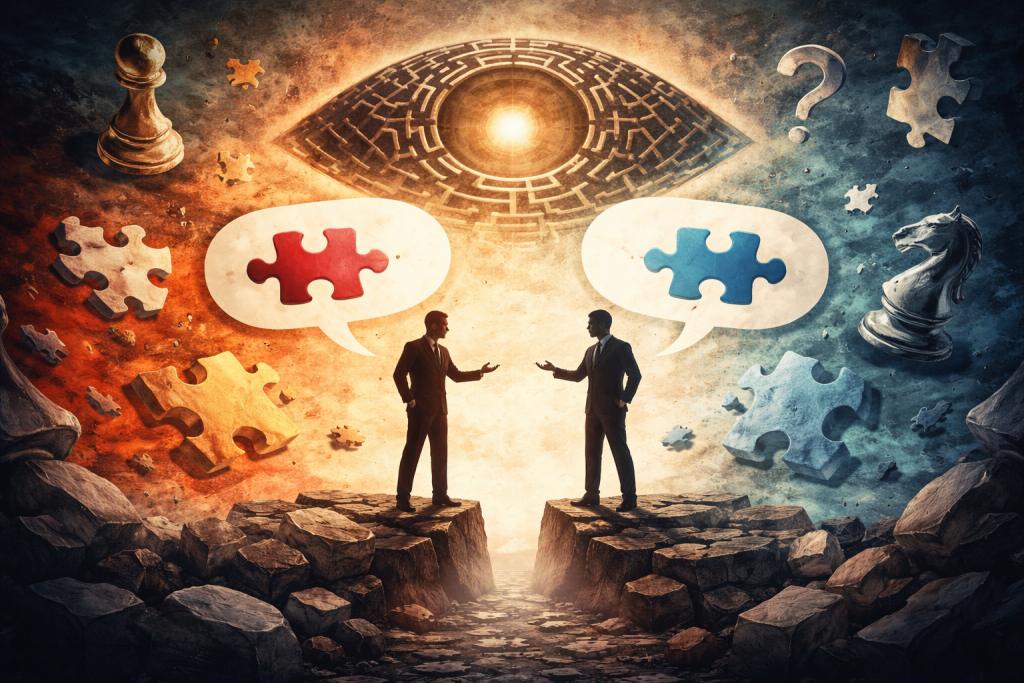
When the Argument Isn’t the Problem: Frames, Games, and Meaning Every argument feels like it’s about facts. You bring Fact A.Someone else brings Fact B.You draw Conclusion C. Most people assume that if the conclusion is wrong, then the logic must be wrong. But that’s almost never where the real problem is. The real problem

Frames, Games, and Meaning: Why Arguments Never End Read More »

What Are Bias Maps? Why are they Important?

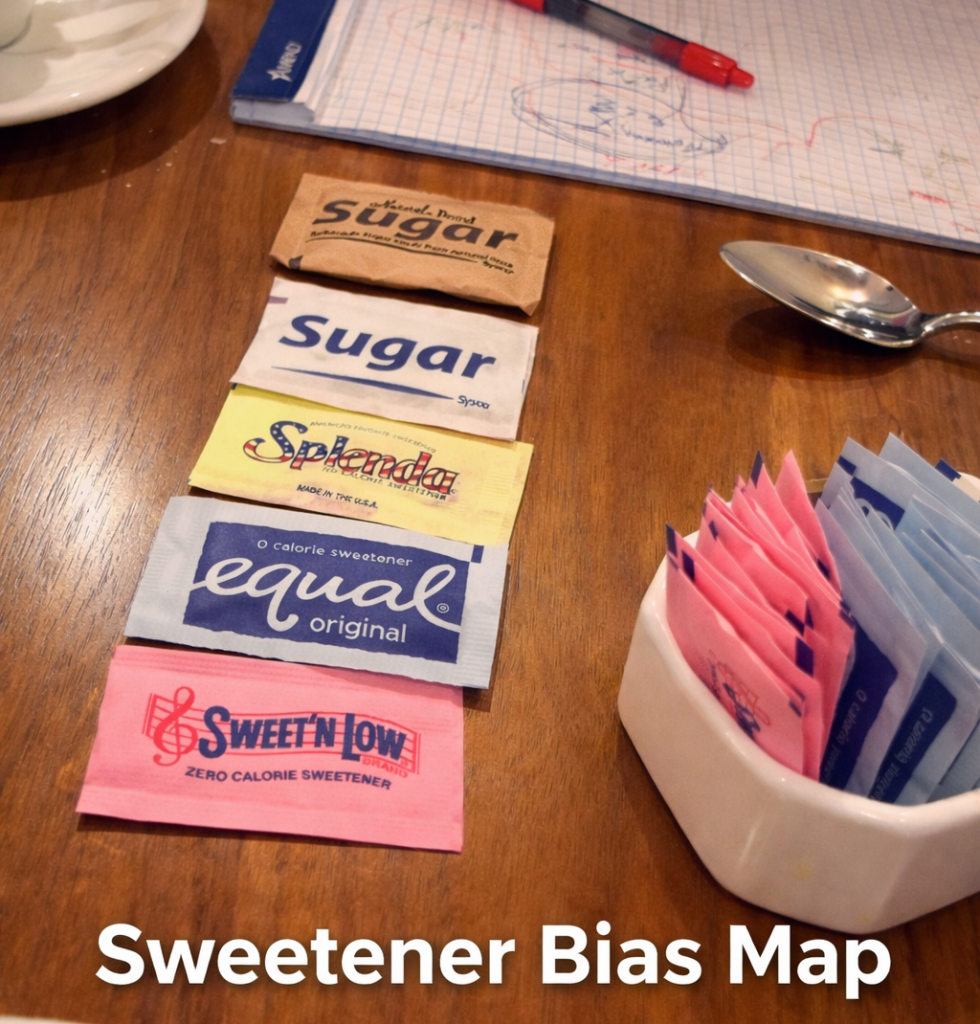
What Is a Bias Map? A Strategic Explanation for Business and Positioning A Bias Map is the internal hierarchy people use to organize reality and make decisions without conscious effort. It is the reason: Bias maps are not opinions.They are decision infrastructure. From a strategic perspective, bias maps determine who gets considered, in what order,

What Are Bias Maps? Why are they Important? Read More »

Categories of Categories.

Categories of Categories: How We Build Meaning Through Mental “Boxes” (and Why Positioning Depends on Them) Last time I got a little intense talking about expression—about being able to explore what’s true, what isn’t, and how truth can be different from “facts” even when people are staring at the same information. That tension matters because

Categories of Categories. Read More »

Why “Think Before You Speak” Sounds Wise—and Still Misses the Point

Why “Think Before You Speak” Sounds Wise—and Still Misses the Point There’s a phrase that circulates constantly online, usually presented as a neat moral checklist: Before you speak, THINK.Is it True?Is it Helpful?Is it Inspiring?Is it Necessary?Is it Kind? I understand why people like it. It gestures toward restraint, empathy, and responsibility. But the more

Why “Think Before You Speak” Sounds Wise—and Still Misses the Point Read More »

Problem Solving Continued

Complex Problems Don’t Have Single Causes — They Have Territories When we talk about problem-solving, we usually mean identifying what’s wrong, isolating it, replacing it, and moving on. That approach works well in simple systems—machines, equations, controlled environments. It fails almost everywhere else. In real life, the variables that matter are rarely isolated. They influence

Problem Solving Continued Read More »

Problem Solving with Interdependent Variables

This and That: Why Complex Problems Don’t Have a Single Cause Most people try to solve complex problems by asking the wrong question. They ask:“What is the problem?” That question assumes there is one problem—one faulty component, one bad decision, one person, one variable—that can be isolated, removed, or replaced so everything else snaps back

Problem Solving with Interdependent Variables Read More »

Categories Part 2: Opportunities

Categories, Part 2: Where the Real Opportunities Live In the previous discussion on categories, we explored why categories aren’t just helpful—they’re essential. They allow us to simplify a complex world, group problems instead of treating everything as a one-off, and make decisions without drowning in information. In this follow-up, the focus shifts to something more

Categories Part 2: Opportunities Read More »

Systems: Categories and Friction. Axioms of productivity.

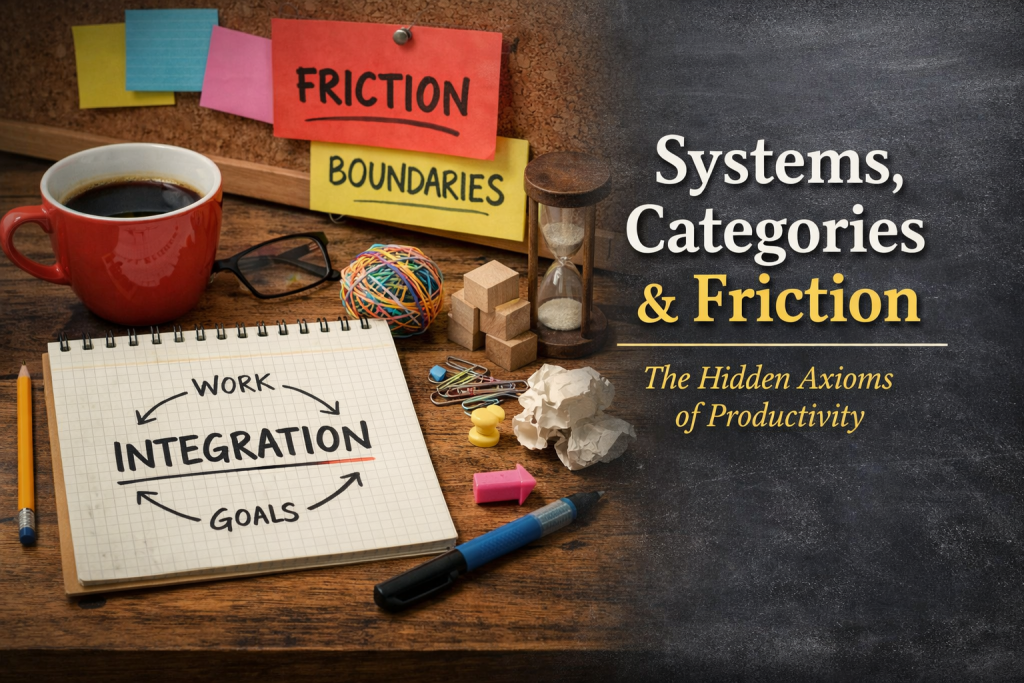
Systems, Categories, and Friction: The Hidden Axioms of Productivity Productivity problems are rarely about effort.They’re almost always about friction. That friction doesn’t come from laziness or lack of intelligence. It comes from how systems are structured, how categories are formed, and how many boundaries exist between the things that need to work together. This is

Systems: Categories and Friction. Axioms of productivity. Read More »

Tactics? Strategies? What is the real use and difference between the two. The Action continuum

Tactics vs. Strategy: what’s the real difference (and why it matters) If you’re trying to change anything—your business, your career, your health—your first point of contact with reality isn’t a strategy deck. It’s action. And action is powered by tactics: small, testable moves that meet the world where it is. Most people talk about “strategy”

Tactics? Strategies? What is the real use and difference between the two. The Action continuum Read More »

Coaching: The difference between professionals and amateurs.

Coaching: The Difference Between Professionals and Amateurs When I’m brought in as a consultant, it’s usually because there’s a problem that needs fixing. Something is broken, stalled, or producing symptoms that can no longer be ignored. But once the diagnostic process begins, a pattern shows up again and again: the visible problem is rarely the

Coaching: The difference between professionals and amateurs. Read More »